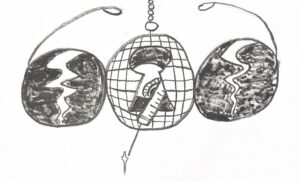
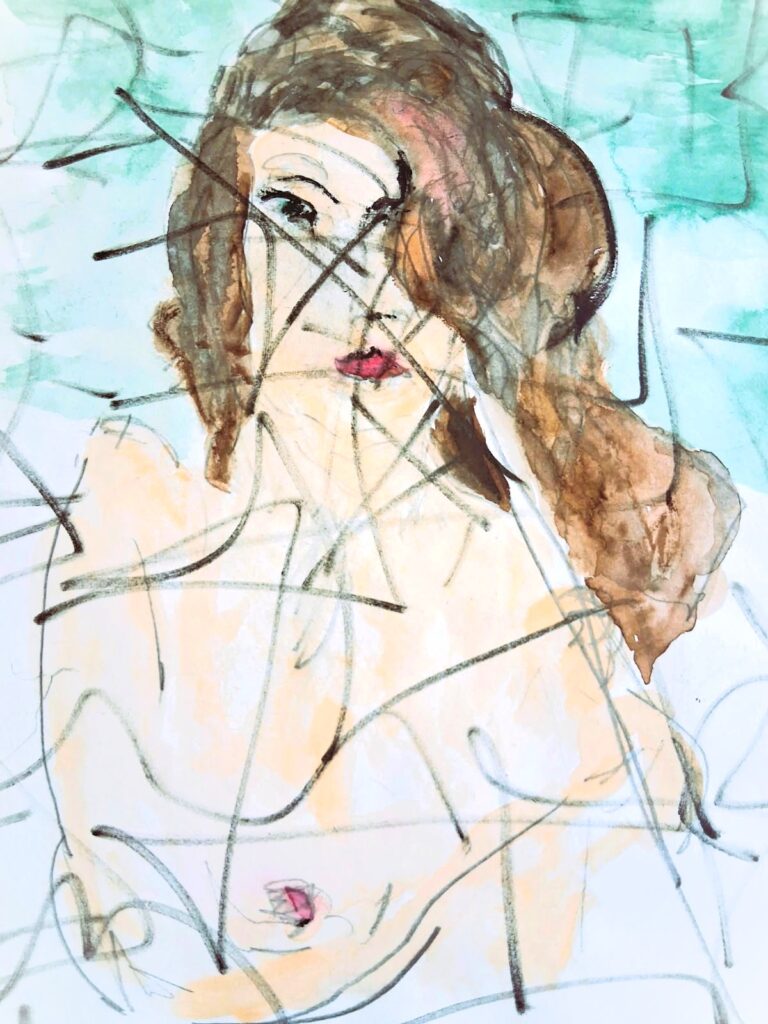
Regina didn’t understand—or, rather, she understood too much. She watched herself from a few feet above the therapy chair, performing a kind of kinetic dissociation. Her brain felt heavy, and the familiar black sheet of overstimulation began to unfurl across her eyes, like her brain was its own proscenium arch.
She didn’t like where therapy was going. EMDR, tapping, bubbles of light where you “let your trauma float away”—all of it felt like cookie-cutter pamphlet nonsense. She was sure her therapist knew it too. Everyone knew it. They were just trying to convince her she was the sick one. She didn’t need help! She needed people to stop being assholes. To stop cutting her in line. To stop sleeping with her and then pretending they’d never met. She needed honesty, not Xerox copied bullshit.
Now mad, Regina started foaming at the mouth. Not because she ate poison or was having a seizure, but because she learned it as a trick during her time “resting” last summer, when she wanted to avoid group therapy.
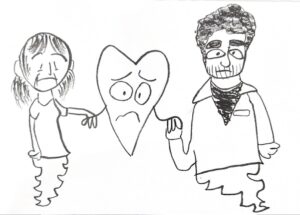
Edith, on her side of the video screen, stiffened. Regina could tell she’d pushed her too far, which only made her display more satisfying.
“I am not an animal,” Regina muttered as foam hit the screen. Elephant Man? Ozzy Osbourne? She couldn’t remember where she heard that and had to resist the urge to Google it, but the thought preoccupied her.
The foam subsided. Edith relaxed. The two drifted back into a calmer, beige-toned version of therapy where EMDR was politely avoided for the remainder of the session.
Everything with Edith was beige. Edith was not an unattractive woman, but she was past something—what, Regina could not tell. The beigeness of her skin and her turtleneck sweater, on a 70-degree day, gave Regina an idea, and she decided, right then, that her new affliction for the day would be nymphomania, purely to make Edith uncomfortable.
She was about to invent a tall tale involving something tall and something with a tail when Edith said, “Time’s up.”
Time’s up.
Time’s up?
Time’s up!
The phrase detonated something inside her. Other people’s time—that was the real problem. She felt a flash of anger, the kind that made her imagine things she’d never actually do. Edith was safe; the session was over video. There was no way to act on any of it, even if she wanted to.
Regina smiled. “Okay, Edith. Thanks for today. I feel better. I really do.” She left the meeting before Edith could schedule another appointment or siphon another dollar.
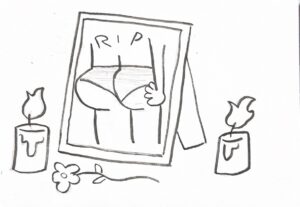
The thought lingered, though—not as a plan, but as a possibility. She liked to toy with possibilities. Edith would die someday. Everyone would. Regina just wondered, abstractly, how the universe would choose to do it and how she could assist.